top of page
20220331_133813 1_edited.jpg

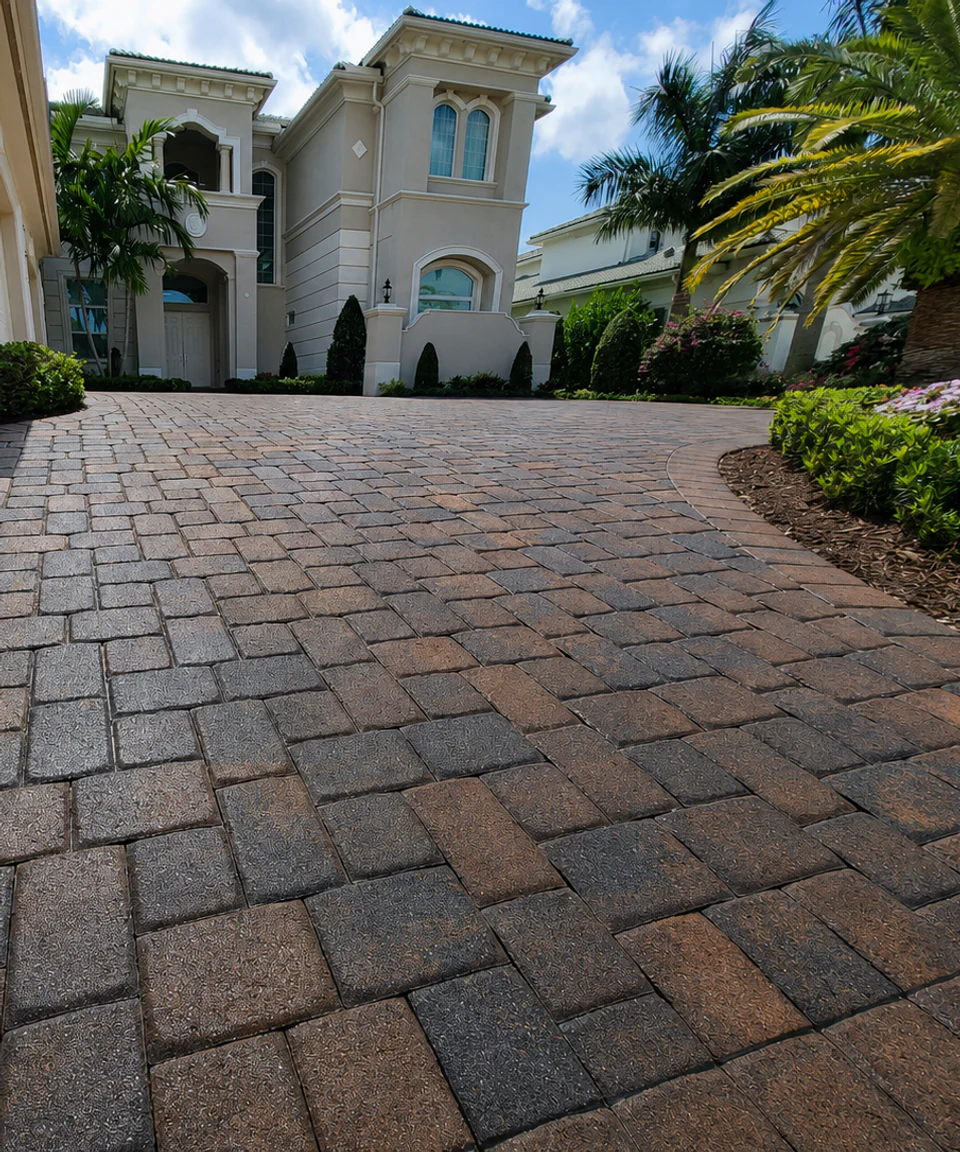
Paver Sealing in Port St. Lucie, FL.

Clean Master provides complete paver cleaning and sealing for Port St. Lucie homes, beginning with an onsite inspection and continuing through detailed surface cleaning, controlled joint excavation, full replacement joint sand, joint stabilization, and a controlled two-stage urethane sealer application.

Choose Standard-Density or Premium High-Density service based on the pavers, traffic, weathering, and finish expectations identified during the estimate. Both options are designed to renew existing color and create a restrained high-satin-to-gloss appearance when the surface can support it.

5.0★ Google Rating • Hundreds of Five-Star Reviews

Fully Insured: General Liability + Workers’ Compensation

Our Customer Reviews

Pressure Washing Service wave.jpg

Does Your Paver Surface Need Cleaning and Sealing?


A faded or dirty paver surface does not automatically need the same service as every other property. Before recommending sealing, we evaluate the pavers, the joints, drainage, staining, previous coatings, and how the surface absorbs water.

Common conditions that justify an onsite evaluation include:

  • Faded or dull paver color

  • Loss of previous color enhancement

  • Low, eroded, or uneven joint sand

  • Recurring weeds or insect disturbance in the joints

  • Organic buildup, mildew, algae, or leaf staining

  • Rust, irrigation, oil, grease, paint, or fertilizer staining

  • Water entering or moving through depleted joints

  • ​Uneven absorption across the paver surface

  • An older sealer that no longer appears to be performing evenly

  • ​A surface that is becoming increasingly difficult to maintain

  • Pavers that have never been sealed

  • An existing coating with an unknown history

  • White, cloudy, peeling, flaking, or heavily built-up sealer

The onsite findings may lead to professional cleaning alone, Standard-Density Paver Sealing, Premium High-Density Paver Sealing, eligible Maintenance Sealing, limited corrective work, failed-sealer removal, or referral for a repair that falls outside the normal cleaning-and-sealing scope.

Faded color by itself is not enough to determine the correct service. The existing coating, joint condition, drainage, stains, paver absorption, and installation condition must be considered together.

Pressure Washing Service wave.jpg

Standard-Density vs. Premium High-Density Paver Sealing

Both complete packages receive the same thorough preparation. Premium does not replace proper cleaning, excavation, or replacement sand. The principal difference is the density and material concentration of the compatible sealing system.

We recommend the package only after evaluating the existing sealer, joint condition, paver absorption, sun exposure, vehicle traffic, weathering, drainage, and the appearance you want to achieve.

Standard-Density Paver Sealing

Standard-Density Paver Sealing combines complete preparation with our standard professional sealer density. It is intended for concrete pavers that are ready for full cleaning, controlled joint excavation, replacement sand, and a controlled two-stage application.

Standard is designed to provide meaningful joint-sand stabilization, renewed existing color, and a restrained satin-to-gloss finish when the pavers can support it. Standard is typically maintained around the two-year mark, although actual performance depends on exposure, traffic, drainage, maintenance, and the existing paver system.

Premium High-Density Paver Sealing

Premium High-Density Paver Sealing receives the same complete inspection, cleaning, stain preparation, joint excavation, and replacement sand as Standard.

Premium uses the highest-density paver-sealing system Clean Master offers. It provides greater joint-stabilization potential, deeper color-enhancement potential, and greater sheen potential. It is often selected for heavily weathered pavers, intense sun exposure, larger driveways, heavier vehicle use, or homeowners who want the strongest enhancement the existing surface can reasonably support.

Premium is typically maintained around the three-year mark, although actual performance depends on the same surface, exposure, traffic, drainage, and maintenance variables.

Standard and Premium include the One-Year Paver Sealing Workmanship Warranty. At least one qualifying Annual Paver Maintenance Cleaning performed by Clean Master each year is required to retain eligibility for reduced-scope Maintenance Sealing.


Paver Areas We

Clean and Seal

Paver Driveways & Front Entries

Paver driveways and connected front entries receive direct sun, irrigation exposure, tire traffic, and repeated joint loading. We inspect the existing coating, stains, drainage, joint depth, and isolated movement before cleaning.

A complete Standard or Premium service includes controlled joint excavation and replacement sand throughout the quoted paver area, followed by the selected two-stage sealer application. The intended result is stronger existing color, a cleaner joint network, and a controlled finish—not an artificial plastic surface.

Paver Patios & Lanais

Patios and lanais often hold organic buildup at screen edges, shaded walls, furniture locations, and low-drainage areas. We clean these transitions carefully, excavate and refill the joints, and select the sealer density based on absorption, previous coating, exposure, and the desired appearance.

Furniture movement is available as a separately quoted line item. Customers who do not purchase furniture movement should clear movable items before service.

Paver Pool Decks

Pool-deck pavers face frequent moisture, sunscreen residue, pool chemicals, shade, and wet foot traffic. We evaluate drainage, existing coating, surface buildup, and the relationship between the pavers and any separate coping material before sealing.

Pool coping may be denser or made from a different material and is evaluated separately. Any outdoor hardscape can become slippery when wet or contaminated; no sealed pool deck is represented as slip-proof.

Paver Walkways & Courtyards

Walkways and courtyards often combine narrow edges, irrigation exposure, tree debris, and uneven sun. Systematic joint clearing and uniform replacement sand help create a more consistent baseline before sealing.

Controlled application is especially important around walls, doors, thresholds, landscaping, and tight transitions so cleaner, sand, and sealer remain on the intended surface as much as practical.

What Proper Paver Sealing Actually Requires

Sealer application is only the final portion of a complete paver-sealing service. A durable, uniform result depends on the condition of the pavers and joints before the first application begins.

A proper service requires coordinated attention to:

  • Paver material, density, porosity, age, and weathering

  • Existing sealer condition and compatibility

  • Water absorption and whether the pavers darken when wet

  • Organic buildup and surface contamination

  • Rust, irrigation, oil, grease, paint, fertilizer, tannin, and mineral staining

  • Joint width, depth, contamination, weeds, insects, and existing sand loss

  • Controlled excavation and meaningful space for replacement sand

  • Uniform joint fill and removal of excess surface sand

  • Drainage, standing water, shade, and surface temperature

  • Rain probability, storm intensity, and the available sealing window

  • Standard or Premium sealer density

  • Correct coverage and application timing

  • Cure protection and return-to-use instructions

The number of coats written on a proposal is less important than applying the correct material quantity, coverage, and timing for the actual pavers and joints. Artificially stretching a sealer over too much square footage can limit joint penetration and leave an inconsistent result.

We evaluate the visible surface and joint conditions before application. When the pavers, joints, temperature, drainage, or weather window are not suitable, we delay the sealing phase rather than force the application.

Controlled Joint Excavation—Not Random Handheld Blasting

Clean Master uses a purpose-built, mechanized joint-extraction system designed to process the joint network systematically rather than relying on random handheld blasting as the primary excavation method.

The system is designed to:

  • Improve consistency across the joint network

  • Reduce technician-to-technician variation

  • Remove weeds, loose organic contamination, and deteriorated joint material

  • Reach joints more consistently than uncontrolled handheld excavation

  • Better contain sand and debris during the clearing process

  • Reduce unnecessary mess on walls, garage doors, streets, and landscaping

  • Use controlled pressure based on the observed pavers and joint condition

  • Create a more uniform baseline for replacement sand

Where the installation allows, we typically target approximately ¾ inch to 1 inch of controlled joint clearing from the top of the paver. Exact depth varies according to joint width, paver condition, installation age, contamination, existing material, and weed growth.

The objective is to clear deeply enough to remove organic contamination and create room for meaningful replacement sand without deliberately disturbing the bedding layer. This process does not repair a failed base, correct major drainage, or guarantee the same depth in every joint.

After excavation, the crew visually inspects the joint network, edges, thresholds, and areas of heavy contamination before replacement sand is installed.

clean master controlled joint excavation


Our Replacement Joint-Sand System

Every complete Standard-Density and Premium High-Density Paver Sealing project includes controlled joint excavation and substantial replacement joint sand. Re-sanding is not treated as an optional finishing touch after cleaning.

We use clean, dry, angular joint sand meeting ASTM C144 gradation requirements. The angular gradation helps the material settle through the joint network and provides a consistent medium for the compatible liquid sealer to stabilize.

Our full-service sanding process includes:

  • Clearing the existing joint network to the depth the installation allows

  • Removing loose, contaminated, and organic joint material

  • Installing substantial replacement sand throughout the quoted area

  • Working the sand through the joints

  • Inspecting high and low joint-fill areas

  • Correcting unintended sand accumulation at thresholds and edges

  • Removing excess material from the paver faces

  • Applying the sealer at a joint-stabilizing rate


Fieldstone is our common default sand color. Other available colors may be selected without an additional color-selection charge under the current company policy.

Material quantity varies according to joint width, joint depth, paver size, excavation depth, existing loss, and total square footage.

The completed system helps stabilize replacement joint sand, reduce ordinary washout and erosion, reduce weed establishment and insect disturbance, and maintain a more uniform joint appearance. It is not weed-proof, ant-proof, permanent, structural reinforcement, or a repair for failed base conditions.


Why We Typically Don’t Use Polymeric Sand on Existing Paver Restoration Projects

Polymeric sand is a legitimate jointing system. It can perform well when the exact product instructions, joint-depth requirements, preparation procedures, watering method, weather window, and cure requirements are followed. New installations and correctly prepared systems may be appropriate applications.

Existing-paver restoration creates a different set of conditions. Correct retrofit installation commonly depends on:

  • Substantial and consistent excavation depth

  • Completely dry pavers and joints before installation

  • Adequate joint depth for the selected product

  • Proper consolidation or compaction

  • Complete removal of surface residue

  • Controlled water activation

  • A suitable rain and temperature window

  • Compliance with the product’s cure requirements


Shallow installation can loosen or pull out. Incomplete consolidation can leave voids. Premature moisture or surface residue can contribute to haze or unwanted deposits. When an existing polymeric installation must be corrected or removed, the work can be labor-intensive.

For most existing-paver restoration projects, Clean Master uses a coordinated system consisting of:

  • Controlled joint excavation

  • Clean, dry, angular ASTM C144 replacement sand

  • Uniform sand installation

  • A compatible liquid joint-stabilizing urethane sealer

  • One coordinated cleaning, sanding, and sealing process


​Our recommendation is based on the service system we can install consistently and support—not on claiming that every other jointing system is wrong.


Sealer Density, Color Enhancement, and Finish Expectations

Clean Master uses a professional-grade, water-based, two-part urethane paver sealer designed to enhance color, create a controlled surface film, and stabilize replacement joint sand.

The system forms a breathable surface film. It is not a penetrating sealer, oil-based coating, solvent-based acrylic, paint, or permanent surface.

Both Standard and Premium receive the same complete preparation and controlled two-stage application. The principal difference is sealer density and material concentration:

  • Standard provides the standard professional density

  • Premium provides the highest-density system Clean Master offers

  • Premium offers greater joint-stabilization potential

  • Premium offers deeper color-enhancement potential

  • Premium offers greater sheen potential


The first application establishes the joint-stabilizing base. The second is applied during the appropriate recoat window to improve uniformity across the paver surface. No standing excess is intentionally left on the surface.

Transparent Color Enrichment for Faded Pavers

When faded pavers need additional enrichment, Clean Master may incorporate a compatible transparent tint within the existing color family. The objective is to strengthen and balance the color already present—not to turn red pavers gray or create an artificial painted surface.

Mild enrichment is generally preferred over an extreme color change. Stronger changes carry greater appearance and maintenance considerations. Exact color matching is not guaranteed, mixed manufacturing batches may absorb differently, and severely faded pavers may not return to their factory-new appearance.

Our goal is to bring out the strongest, most uniform appearance your existing pavers can reasonably achieve.

What Determines the Final Sheen?

The final appearance depends on:

  • ​Paver age and original pigment

  • Porosity and surface density

  • Weathering and sun exposure

  • Previous sealer and remaining coating

  • Surface absorption

  • Mixed manufacturing batches

  • Standard or Premium density

  • Transparent color-enrichment selection

  • Shade, drainage, and application conditions


​The common target is richer existing color with a restrained high-satin-to-gloss appearance. The result is not intended to look like a mirror, plastic sheet, oil slick, or permanently wet surface. Exact color and a specific gloss level cannot be guaranteed.

Complete Paver Cleaning and Sealing Process

  1. Onsite inspection and measurement
    We measure the quoted paver area and review access, adjoining surfaces, drainage, and the overall condition of the installation.

  2. Existing-sealer evaluation
    We visually inspect the coating, review customer history when available, and evaluate water absorption or whether the pavers darken when wet.

  3. Joint, stain, and repair review
    We assess joint depth, existing sand loss, weeds, insect disturbance, staining, isolated repairs, drainage, and any standing-water concerns.

  4. Package and scope confirmation
    The proposal identifies Standard or Premium service, sand-color selection, expected finish, assessed stain preparation, furniture movement, and any separately quoted corrections.

  5. Service-day confirmation and site protection
    The crew confirms the work area and finish expectations and protects or actively rinses adjacent non-target surfaces as appropriate.

  6. Stain pretreatment
    Known stain conditions are addressed early so the selected treatments receive the appropriate working time.

  7. Controlled joint excavation
    The joint network is cleared systematically to remove loose sand, weeds, organic contamination, and deteriorated joint material.

  8. Broad-area cleaning and detailed edge work
    We clean organic buildup and surface contamination, address joints and edges, and perform mineral or efflorescence preparation when appropriate.

  9. Rinsing and surface cleanup
    The pavers, joints, thresholds, and adjoining work-area transitions are rinsed and prepared for sand installation.

  10. Replacement joint-sand installation
    Clean, dry, angular ASTM C144 joint sand is installed and worked through the excavated joint network.

  11. Joint-fill and excess-sand inspection
    The crew checks high and low fill areas, corrects unintended accumulation, and removes excess sand from the paver faces and thresholds.

  12. Weather and application review
    Before sealer is mixed, we review multiple weather sources and evaluate rain probability, storm intensity, drainage, surface conditions, and standing-water risk.

  13. Controlled two-stage application
    The selected Standard or Premium system is prepared. The first low-pressure, high-volume application establishes the joint-stabilizing base. The second application improves surface uniformity during the appropriate recoat window.

  14. Site securing and cure instructions
    The area is secured with service signs or caution tape where appropriate. We review foot traffic, vehicle traffic, irrigation, pool service, furniture, and other project-specific cure instructions before leaving.

​​

Can the Existing Sealer Be Coated—or Must It Be Removed?

Previously sealed pavers are evaluated for condition and compatibility. Some surfaces may qualify for cleaning and resealing, while cloudy, peeling, heavily built-up, incompatible, or failed coatings may require corrective work or removal first.

The onsite findings may lead to one of four recommendations:

  1. Complete Standard-Density or Premium High-Density Paver Sealing

  2. Maintenance Sealing for an eligible returning customer

  3. Partial corrective work

  4. Full failed-sealer removal

When Standard or Premium Resealing May Be Appropriate

Ordinary cleaning and resealing may be appropriate when the existing coating remains sufficiently sound, preparation can create a suitable surface, and no incompatible or failed condition prevents proper application.

We evaluate:

  • Visible coating condition

  • Water repellency and absorption

  • Whether the pavers darken when wet

  • Customer history when available

  • Uneven gloss or patchiness

  • Coating buildup

  • Joint condition

  • Drainage and standing water

  • Stains trapped above or beneath the coating


Compatibility is not assumed simply because a coating looks acceptable from a distance.

When Corrective Work or Removal Is Required


Corrective evaluation is commonly required when the surface shows:

  • White or cloudy coating

  • Peeling or flaking

  • Delamination

  • Trapped moisture

  • Heavy uneven gloss

  • Excess buildup

  • Multiple old layers

  • Severe patchiness

  • An incompatible coating

  • Tire marks or staining trapped beneath an old coating

  • A heavily hydrophobic surface that is unsuitable for ordinary preparation


Cloudy, peeling, white, or heavily built-up coatings may require failed paver sealer stripping before the surface can be resealed correctly. No promise of compatibility or successful recoating is made before onsite inspection.

Minor Paver Corrections, Root Barriers, and Stain Preparation


Stain Preparation Included in the Proposal

During the onsite estimate, we evaluate visible organic buildup, rust, irrigation staining, oil, grease, efflorescence, leaf or tannin marks, paint, fertilizer staining, and other observed conditions.

When stain treatment is known to be necessary for the quoted Standard or Premium service, the appropriate preparation is incorporated into the proposal rather than presented as an unexpected service-day add-on.

Some deeply absorbed, chemically altered, or permanent stains may improve without disappearing completely. Additional information about individual staining conditions is available through our specialty stain treatment services page.

Limited Corrections and Root Barriers Quoted Separately

The following items may be added as separate line items on the same sealing proposal:

  • Resetting a few sunken pavers

  • Minor isolated leveling

  • Replacing individual broken pavers when the homeowner supplies suitable matching pieces

  • Several limited correction spots

  • Furniture movement


Limited repair areas are generally individual or isolated. A single correction area is normally no more than approximately 50 square feet. Areas larger than approximately 15 square feet may require separate scheduling.

Root-related correction and root-barrier installation are quoted separately and normally performed on a separate service day. The final approach depends on root size, location, access, and the extent of the affected pavers.

Work Outside the Normal Sealing Scope


The normal cleaning-and-sealing scope does not include:

  • Base reconstruction

  • Major drainage correction

  • Failed edge-restraint replacement

  • Foundation correction

  • Large-area leveling

  • Major paver installation

  • Large structural repair

  • Full pool-coping repair

  • Automatic supply of matching replacement pavers


Larger base, drainage, edge-restraint, installation, or structural conditions require evaluation by an appropriate specialist before sealing proceeds.​


Annual Paver Maintenance Cleaning and Maintenance Sealing

Annual Paver Maintenance Cleaning

Annual Paver Maintenance Cleaning is a cleaning-only service intended to help remove ordinary organic and environmental buildup before the coating is neglected to the point that full restoration is required.

The annual service also gives Clean Master an opportunity to inspect:

  • Coating condition

  • Joint-sand retention

  • Weed or insect activity

  • Staining

  • Drainage

  • Damage caused by chemicals or aggressive cleaning

  • Conditions that may affect future Maintenance Sealing eligibility


At least one qualifying Annual Paver Maintenance Cleaning must be completed by Clean Master each year for the customer to retain eligibility for reduced-scope Maintenance Sealing.

Annual cleaning does not guarantee that Maintenance Sealing will remain appropriate. Severe staining, coating failure, outside chemicals, another company’s cleaning, joint loss, damage, drainage problems, or other changed conditions may require a new complete service.

Annual cleaning is not a prepaid care plan and is not silently included in the original Standard or Premium price.

Maintenance Sealing for Returning Customers

Maintenance Sealing is available only to eligible returning Clean Master customers whose existing Standard or Premium coating remains sound and compatible.

It is a one-time extension of the existing system, not a substitute for full restoration. Eligible returning customers may qualify for a reduced-scope, lower-cost Maintenance Sealing service because the surface requires less excavation, replacement sand, and material than a complete restoration.

Maintenance Sealing commonly includes:

  • Full surface cleaning

  • Organic-treatment cleaning

  • Light joint cleaning

  • Sand top-off

  • Reduced material usage

  • One or two lighter compatible applications based on existing conditions

  • Project-specific cure instructions

Maintenance Sealing does not normally include:

  • Full joint excavation

  • Extensive stain restoration

  • Failed-sealer stripping

  • Major weed removal

  • Major sand replacement

  • Repair correction

  • Whitening or peeling correction

Maintenance Sealing is not available when the surface has:

  • Whitening or clouding

  • Peeling or delamination

  • Severe coating buildup

  • Severe staining

  • Major sand loss

  • Heavy weed growth

  • An unknown customer-applied product

  • Damage from another cleaning provider

  • Major paver movement

  • Drainage or standing-water problems

  • Repairs that must be completed first

Maintenance Sealing may be used once as an extension. The next sealing cycle returns to a complete Standard-Density or Premium High-Density Paver Sealing service.

Maintenance Sealing does not receive the One-Year Paver Sealing Workmanship Warranty that applies to complete Standard and Premium service.

Before & After Paver Sealing Results

These are genuine Clean Master paver cleaning, controlled joint excavation, re-sanding, color-enhancement, and sealing projects from Port St. Lucie and surrounding Treasure Coast areas.

Results vary according to the paver age, pigment, porosity, previous coating, staining, joint condition, weathering, and selected sealer density.

Pressure Washing Service wave.jpg

What Affects Paver Sealing Cost?

Paver-sealing proposals are based on the actual surface, joint system, existing coating, preparation requirements, and selected density. A final quote requires an onsite inspection.

Pricing factors include:

  • Total square footage

  • Standard-Density or Premium High-Density selection

  • Existing-sealer condition and compatibility

  • Whitening, peeling, clouding, or coating failure

  • Joint width, depth, and existing sand loss

  • Excavation severity

  • Weed and organic contamination

  • Replacement-sand quantity

  • Rust, irrigation, oil, grease, paint, fertilizer, and other staining

  • Efflorescence or mineral preparation

  • Access to the work area

  • Furniture movement

  • Isolated paver corrections

  • Root-related work or root-barrier installation

  • Pool, lanai, or enclosed-area access

  • Drainage and standing-water conditions

  • The available weather window

  • Multiple separated work areas

Stain conditions identified during estimating are evaluated and incorporated into the Standard or Premium proposal when treatment is necessary for the quoted work.

Minor paver corrections and furniture movement appear as separate line items. Root barriers and larger root work receive separate proposals. Failed-sealer removal is a different corrective service.

Photos or a phone conversation can begin the evaluation, but the final proposal normally follows an onsite inspection.


Paver Sealing FAQs

How often should pavers be sealed in Port St. Lucie?

Standard-Density Paver Sealing is typically maintained around the two-year mark. Premium High-Density Paver Sealing commonly extends that interval to approximately three years.

These are typical maintenance intervals, not guarantees. Direct sun, shade, vehicle traffic, heavy vehicles, irrigation, drainage, standing water, pool chemicals, spills, aggressive cleaning, previous coatings, paver absorption, joint condition, and maintenance history all affect performance.

What is included in complete Paver Sealing?

A complete Standard or Premium service includes onsite inspection, measurement, existing-sealer evaluation, water-absorption review, drainage and stain assessment, detailed cleaning, assessed stain preparation, controlled joint excavation, substantial replacement ASTM C144 joint sand, sand-color selection, a controlled two-stage sealer application, cure instructions, and the One-Year Paver Sealing Workmanship Warranty.
Repairs, furniture movement, and root-barrier work are separately identified when applicable.

What is the difference between Standard and Premium?

Both receive the same complete inspection, cleaning, stain preparation, controlled joint excavation, replacement sand, and two-stage application.

Standard uses the standard professional sealer density and is typically maintained around two years. Premium uses the highest-density system Clean Master offers and provides greater joint-stabilization, color-enhancement, and sheen potential, with a typical maintenance interval of approximately three years.
 

Do you re-sand every Standard or Premium project?
 

Yes. Every complete Standard-Density and Premium High-Density project includes controlled joint excavation and substantial replacement joint sand throughout the quoted paver area.

Material quantity varies by joint width, depth, paver size, excavation depth, existing loss, and total square footage.

How deeply do you clear the paver joints?
 

Where the installation allows, we typically target approximately ¾ inch to 1 inch of controlled clearing from the top of the paver.

Exact depth varies by joint width, paver condition, installation age, contamination, existing material, and weed growth. The objective is to create room for meaningful replacement sand without deliberately disturbing the bedding layer.
 

What type of joint sand do you use?
 

We use clean, dry, angular joint sand meeting ASTM C144 gradation requirements. It is not polymeric sand.

The replacement sand is installed throughout every complete Standard and Premium project and stabilized by the compatible liquid urethane sealer system. Fieldstone is the common default color, with other available colors offered under the current color-selection policy.
 

Why do you typically not use polymeric sand on existing pavers?
 

Polymeric sand is a legitimate jointing system when its product-specific depth, compaction, dryness, watering, weather, and cure requirements are followed.

For existing-paver restoration, Clean Master generally uses controlled excavation, angular ASTM C144 replacement sand, and a compatible liquid joint-stabilizing urethane system because that is the coordinated restoration process we can install consistently and support.
 

Will sealing stop every weed?
 

No. Sealing is not weed-proof.

Controlled excavation, replacement sand, and compatible liquid stabilization can help reduce weed establishment and ordinary joint disturbance. Seeds, organic material, moisture, paver movement, drainage, and surrounding conditions can still contribute to future growth.
 

Will sealing make my pavers slippery?
 

Any outdoor hardscape can become slippery when wet or contaminated. Surface texture, application rate, moisture, footwear, contaminants, and maintenance all affect traction.

Clean Master controls the application and avoids unnecessary surface buildup, but no sealed surface is represented as slip-proof.
 

Will the sealer change the paver color?
 

The system is intended to enrich the existing color and can produce a wet-look color enhancement. It does not paint the pavers or replace the original surface pigment.

The amount of change depends on paver age, porosity, pigment, weathering, previous coatings, absorption, and the selected density.
 

Can faded pavers receive transparent color enrichment, and can exact color or gloss be guaranteed?
 

When appropriate, a compatible transparent tint may be incorporated within the existing color family to strengthen and balance faded color. The objective is controlled enrichment rather than extreme recoloring.

Exact color matching, identical absorption, factory-new appearance, and a specific gloss level cannot be guaranteed.
 

Can you coat over sealer applied by another company?
 

Possibly, but compatibility is not assumed.

We inspect the coating, evaluate water repellency and absorption, review customer history when available, and look for clouding, peeling, buildup, patchiness, trapped stains, and other failure conditions. Some surfaces qualify for cleaning and resealing, while others require corrective work or removal.
 

What if the existing sealer is white, cloudy, or peeling?
 

White, cloudy, peeling, flaking, delaminating, or heavily built-up coatings commonly require corrective evaluation. Ordinary resealing should not be promised over a failed or incompatible coating.

The correct next step may be partial correction or failed paver sealer stripping before a new sealing system is applied.
 

How long does the Paver Sealing process take?
 

Many Standard and Premium projects are completed in one service day when weather, access, drainage, project size, and surface conditions permit.

Larger or corrective projects may require more time. The crew may also prepare the surface and return later that day or the following day when the available sealing window is not suitable.
 

How long before I can walk or drive on the sealed pavers?
 

Ordinary foot traffic is commonly delayed for approximately 24 hours. Vehicle traffic commonly requires approximately 48–72 hours.

Patio or pool furniture and normal pool-deck activity commonly require around 24 hours. Golf carts commonly require around 48 hours. Heavy delivery vehicles commonly require approximately 72 hours. Pool service should be delayed at least 48 hours, and a longer delay may be recommended.

Weather, temperature, shade, drainage, surface conditions, and application conditions may extend these periods. Follow the crew’s project-specific instructions.
 

Can newly installed pavers be sealed?
 

For newly installed pavers, we commonly recommend allowing approximately 30–60 days before sealing so the installation can stabilize and early mineral residue can be addressed.

Exact timing depends on the pavers, installation system, joint material, weather, drainage, and surface condition. Sealing does not correct incomplete installation or replace final installer compaction.
 

Do you perform minor paver repairs?
 

Limited paver corrections may be quoted alongside sealing. Examples include a few isolated resets, minor leveling, or replacement of individual broken pavers when the homeowner provides suitable matching pieces.

Larger base, drainage, edge-restraint, installation, structural, or coping repairs fall outside the normal cleaning-and-sealing scope.
 

What is Maintenance Sealing?
 

Maintenance Sealing is a one-time, reduced-scope extension available only to eligible returning Clean Master customers whose existing Standard or Premium coating remains sound and compatible.
 

Annual Paver Maintenance Cleaning by Clean Master is required to retain eligibility. Maintenance Sealing commonly uses less excavation, replacement sand, and sealer than a complete restoration. It does not receive the Standard/Premium one-year workmanship warranty, and the next sealing cycle returns to a complete Standard or Premium service.
 

Pressure Washing Service wave.jpg


What to Expect on

Service Day

Many complete Paver Sealing projects can be cleaned, excavated, re-sanded, sealed, secured, and reviewed in one service day when weather and site conditions permit. Larger, corrective, poorly drained, or weather-affected projects may take longer or require a return later that day or the following day.

Before the crew arrives:

  • Move vehicles away from the work area

  • Remove furniture, planters, decorations, and movable items unless furniture movement was purchased

  • Unlock gates and provide clear access

  • Keep pets inside and away from the work area

  • Inform pool-service and landscaping providers

  • Avoid scheduling pool service during the immediate project period

  • Follow Clean Master’s irrigation instructions

  • Keep other service providers out of the work area where practical

During service:

  • We confirm the scope and finish expectations

  • Stain treatments are started as appropriate

  • Controlled joint excavation is completed

  • The pavers, joints, edges, and stains are cleaned

  • Replacement joint sand is installed and inspected

  • Weather and surface conditions are reviewed before sealer is mixed

  • The selected two-stage system is applied when the sealing window is suitable

  • The area is secured with caution tape or service signs where appropriate

  • The crew performs a final cleanup and reviews cure instructions

Our controlled application and cleanup procedures are designed to keep cleaner, sand, and sealer on the intended surface and reduce unintended contact with walls, landscaping, pool areas, and neighboring property.

The crew may vacuum loose material from pool-adjacent areas as part of jobsite cleanup when needed. This is not a professional pool-cleaning service, and zero debris cannot be guaranteed.

Before leaving, the crew provides project-specific instructions for foot traffic, vehicles, furniture, irrigation, landscaping, pool service, and other activity.

Unexpected Florida weather is evaluated after the surface dries. When exposure causes a qualifying coating issue, Clean Master inspects the affected area and applies the appropriate correction under the applicable workmanship-warranty terms.

after (25).jpg


Why Port St. Lucie Homeowners Choose Clean Master
 

  • More than 10 years of exterior-cleaning and paver-service experience

  • Family owned, locally owned, and operated from Port St. Lucie

  • Fully insured with General Liability and Workers’ Compensation coverage

  • Primarily residential service with appropriate commercial paver projects accepted

  • Free onsite evaluation before the final proposal

  • Purpose-built joint-extraction system

  • Owner-led training and extensive hands-on field preparation for sealing technicians

  • Complete controlled excavation and replacement sand on Standard and Premium projects

  • Standard-Density and Premium High-Density options

  • Transparent color enrichment when appropriate

  • Multi-source weather review before sealer is mixed

  • Clear communication about color, sheen, cure time, and realistic limitations

  • One-Year Paver Sealing Workmanship Warranty on Standard and Premium service

  • A defined returning-customer maintenance process rather than an automatic recoating promise
     

The One-Year Paver Sealing Workmanship Warranty may cover qualifying workmanship conditions such as premature whitening or clouding caused by preparation or application, peeling or delamination caused by preparation or application failure, visibly missed areas, severely uneven application, or a rain-affected area that does not properly cure.
 

Clean Master inspects the reported condition and determines the correction that matches the verified problem. The correction may involve another controlled application or stripping and resealing an affected area when necessary. The warranty is not a product warranty, appearance guarantee, gloss guarantee, weed warranty, stain warranty, maintenance guarantee, or money-back guarantee.
 

PGA Verano.jpg

Related Sealing and Restoration Services

Ordinary Paver Sealing is not the correct service for every coating condition or surface material.

These related services use different preparation and sealer systems and are evaluated separately.

Failed Paver Sealer Stripping

White, cloudy, peeling, delaminating, heavily built-up, or incompatible coatings may require removal before a new paver-sealing system can be applied.

Travertine & Natural Stone Sealing

Travertine, marble, and other natural-stone surfaces require a different approach from ordinary interlocking concrete pavers. The material, absorption, finish, moisture exposure, and surrounding pool conditions are evaluated separately.

Concrete Sealing

Plain concrete is not the same as a concrete-paver system. Concrete Sealing uses a separate service approach for standard concrete driveways, walkways, patios, and other suitable surfaces.

Get a Paver Sealing Quote

We confirm square footage, condition level, existing sealer status,

and your preferred finish—then send a clear estimate.

Fully insured • Local Port St. Lucie company • Clear recommendations before work begins

Areas We Service


Clean Master Exterior Services is based in Port St. Lucie and provides Paver Sealing throughout the city, including homes in and around Tradition, along with suitable projects in surrounding Treasure Coast communities.

Our approved service area includes:

  • Port St. Lucie

  • Fort Pierce

  • Jensen Beach

  • Palm City

  • Stuart

  • Hobe Sound

  • Jupiter

  • Vero Beach

  • Nearby Treasure Coast communities


Call or text 772-999-8282 to confirm availability for a property near the edge of the normal service area.

bottom of page