Written scope
What may be included
- General dirt and organic buildup on agreed durable flatwork
- Surface-cleaner work where appropriate, with controlled edge and detail work
- Pressure and chemistry adjusted to the material and condition
Durable-surface cleaning
Pressure washing is suited to selected durable exterior surfaces where water pressure, access, drainage, and nearby materials can be evaluated together. Clean Master reviews the surface before defining the cleaning approach.
Clean Master serves Port St. Lucie, Palm City, Stuart, and Jensen Beach.
Written scope
Separate decisions
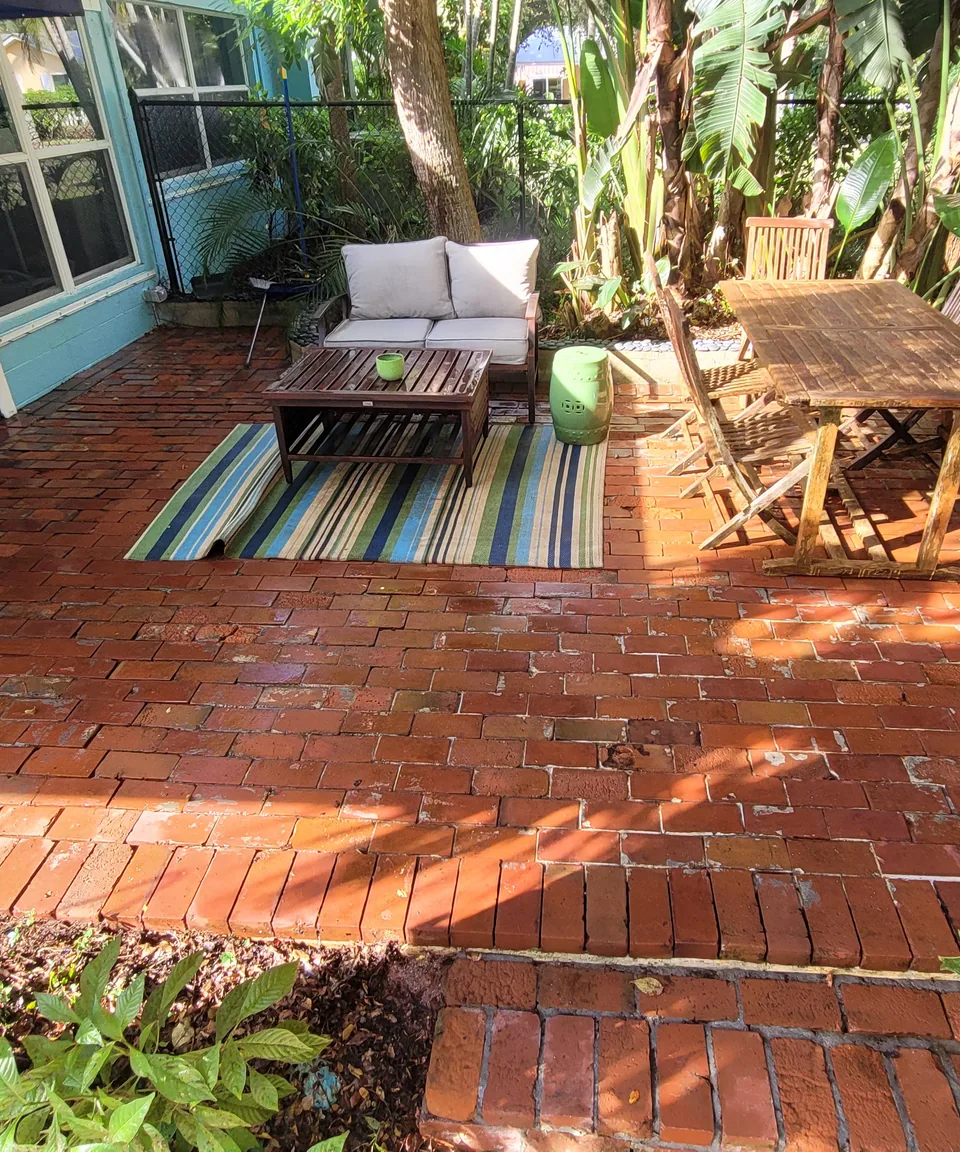
Use pressure where it belongs
The useful question is not simply whether an area can be pressure washed. It is whether the substrate, coating, edges, drainage, and nearby finishes support that method.
Surface-cleaner work can support an even pass on eligible durable concrete, with controlled detail work at edges and transitions.
Finish, age, joints, repairs, drainage, and the pool or landscape edge all affect the workable approach.
Rust, oil, paint, minerals, and heavy tire marks are evaluated separately from ordinary dirt and organic buildup.
Painted, sealed, fragile, or unidentified materials may need a different plan instead of more pressure.
Customer feedback on Google
A selected customer excerpt from Clean Master's public Google Maps profile.
Very professional job . My roof and driveway were cleaned . Prompt response and quotation. Good value. I highly recommend this company
Google displayed “7 months ago” when this excerpt was retrieved on .
Scope signals
Pressure Washing workflow
Clean Master uses the steps below to connect the material, service method, written scope, preparation, and realistic finish expectations.
Confirm what the surface is made of and note coatings, joints, edges, and transitions.
Plan around nearby walls, landscaping, vehicles, doors, drains, and pedestrian areas.
Match the working plan to the surface condition rather than assuming every area should be treated alike.
Review edges, transitions, and any condition that remains visible after cleaning.
Realistic expectations
Service day
Port St. Lucie homeowner guide
Choose the approach by surface. Compare the estimate by scope.
Soft washing uses a controlled low-pressure application and a selected cleaning treatment. Pressure washing uses water pressure as part of the cleaning process on eligible durable surfaces. A Port St. Lucie home may need both: one method for compatible walls or roofing, another for suitable flatwork.
Find your surface01 / Understand the difference
The cleaning treatment and controlled application do much of the work. Clean Master uses this approach for eligible roofs and compatible exterior elevations, with the plan adjusted to the material and property.
Ask which surfaces will be treated, how nearby features will be protected, and what existing wear could remain visible afterward.
Water pressure helps clean selected durable surfaces such as eligible concrete driveways and walks. The working pressure, cleaning treatment, edges, and surrounding finishes still need review.
Ask about coatings and repaired areas, which stains need separate treatment, and where the water will travel.
Neither label defines the whole job. “Soft wash” does not mean chemical-free, and “pressure wash” does not mean every part of the property receives the same pressure. The estimate should explain the approach for each included area.
02 / Start with your surface
Use these as starting points for the property review. Eligibility depends on the actual material, finish, condition, and surroundings.
Pressure-washing review
Sound, eligible concrete may suit controlled pressure washing. Flag surface wear, patches, painted areas, sealers, joints, and edges before choosing a method. Rust and oil need their own evaluation.
Concrete & flatwork cleaningHouse-washing review
Compatible exterior elevations may suit controlled soft washing. Identify chalky or failing paint, cracks, repairs, openings, and aging seals. A low-pressure method still needs a finish-specific plan.
House-washing scopeRoof-specific soft-wash review
Clean Master uses controlled low-pressure chemical application for eligible roofs. Material, pitch, condition, access, and runoff determine the plan. Roof walking is not assumed; disclose leaks or loose and damaged material.
Roof-cleaning approachMaterial & coating review
Identify the paver material, joint condition, existing coating, and drainage. Cleaning, replacement joint sand, sealing, and failed-sealer work are different scope decisions. Cloudy or peeling sealer is not a reason to simply increase pressure.
Paver cleaning & sealing decisionsMaterial-specific review
Name the stone if known and share coating history, repairs, and photos of the finish. Do not choose a treatment from appearance alone or assume guidance for concrete applies to natural stone.
Natural-stone guidanceSeparate each surface
A deck, screen enclosure, and inside-lanai area may need different methods and access. Confirm the deck finish, pool edge, drainage, screens, and included areas. House washing does not automatically include the enclosure or lanai.
House-wash boundariesExterior-glass scope
A rinse during surrounding work is not detailed window cleaning. Name the glass, screens, tracks, and frames to be included. Mineral deposits need separate review; exterior washing cannot fix fogging between panes.
Exterior-window cleaning03 / Set realistic expectations
A darker patch is a visible symptom, not a diagnosis. Separate the result you want from what cleaning can reasonably change.
When marks keep returning in the same place, discuss the source as well as the cleaning. Irrigation, leaks, or vehicle fluids can continue creating a stain after treatment. Review stain-treatment limits.
04 / Compare what is actually included
Two quotes labeled “exterior washing” may describe different work. Compare these details before comparing the totals.
List the driveway, walk, roof, wall elevations, pool deck, or other surfaces individually. Clarify boundaries, edges, and areas behind gates.
Share known paint, sealer, recent repairs, damaged areas, or prior cleaning products. Say “unknown” when needed; a photo cannot establish every material or coating.
Confirm what will receive soft washing, pressure washing, detailed glass cleaning, or another condition-specific approach. Ask which areas may need testing, exclusion, or an in-person review.
Ask about corrective stains, oxidation, gutter brightening, screen enclosures, inside-lanai areas, windows, and window components. For pavers, separate cleaning, joint work, sealing, stripping, and repairs.
Agree on vehicle and furniture moves, gate access, water availability, sensitive plants, drainage concerns, and how people and pets will stay clear of the work area.
Ask what could remain visible, how completed areas will be reviewed, when they may return to use, and whether additional treatment is included or separately quoted. Any applicable coverage should be provided in writing.
05 / Plan around the property
For a Port St. Lucie home, the practical details may include screened living areas, irrigation, closely planted walls, and a neighborhood appearance notice. Share the conditions at your property instead of assuming a standard setup.
Identify gate arrangements, parking, height, hose access, exterior outlets and fixtures, and items that cannot easily be moved. Close windows and doors and disclose leaks, aging seals, loose fixtures, and fragile finishes. Confirm the final preparation instructions with the crew.
Point out low spots, downspouts, drains, pool edges, ponds, and sensitive landscaping. Ask how runoff, drift, and adjacent areas will be managed for the selected scope. Clean Master’s roof-cleaning plan considers landscaping and rinse needs; that is not an unconditional plant guarantee.
If an association is involved, share the actual notice and any written contractor, access, or method requirements. Tell us the requested date and any requirements you already have, so they can be considered in the estimate. Weather, condition, and access can affect timing; cleaning does not guarantee HOA acceptance.
Useful answers
Review common questions about the method, included scope, preparation, and conditions that can change the result.
Share the notice, affected areas, deadline, and any written method or contractor requirements before scheduling. Cleaning can address eligible removable buildup, but it cannot guarantee HOA acceptance or a particular deadline. Ask what completion documentation is included and compare it with the notice you received.
There is no single interval for every property. Material, shade, moisture, irrigation, drainage, vegetation, and the returning condition affect the next review. Ask about the cause of recurring marks and assess the actual surfaces rather than assuming the same calendar schedule for the roof, walls, and driveway.
No. Material, finish, age, condition, and nearby surfaces should be reviewed first. More delicate areas may call for another cleaning approach.
Not always. Rust, oil, paint, mineral deposits, and discoloration can behave differently from ordinary surface soil and may need separate stain evaluation.
Vehicles, planters, furniture, toys, and other loose objects should be moved when practical. The exact preparation depends on the work area.
Yes. Commercial areas need additional planning for access, pedestrians, operating hours, runoff, and the surrounding property.
Pressure washing is considered for selected durable surfaces. Controlled soft washing is used for eligible roofs and compatible exterior elevations. Material, finish, condition, access, drainage, and nearby features determine the appropriate plan.
Only after the coating, repairs, edges, condition, and surrounding finishes are reviewed. A delicate, failing, sealed, or unknown finish may require another method or may need to be excluded.
An eligible pool deck can be considered when its material, finish, coating, condition, drainage, and nearby pool features support the selected method. Pool-deck cleaning does not automatically include sealing or corrective stain treatment.
Not automatically. Ordinary pressure washing addresses compatible surface buildup. Rust, irrigation staining, oil, paint, mineral deposits, and heavy tire marks need a separate condition-specific evaluation and written scope, and complete removal cannot be promised.